eIDAS 2.0 is in force
Where the European Digital Identity framework stands
Regulation (EU) 2024/1183, amending eIDAS to introduce the European Digital Identity framework, entered into force on 20 May 2024. Member states are required to make EUDI Wallet solutions available by 2026. The large-scale pilots running under the previous framework have demonstrated cross-border credential exchange in live environments across healthcare, education, finance, and public administration.
For legal entities, the EU Business Wallet track is developing in parallel. The ARF defines the technical baseline all conformant implementations must meet. The specification is evolving; not every dimension is final, but the core presentation and verification layer is stable enough to build against now.
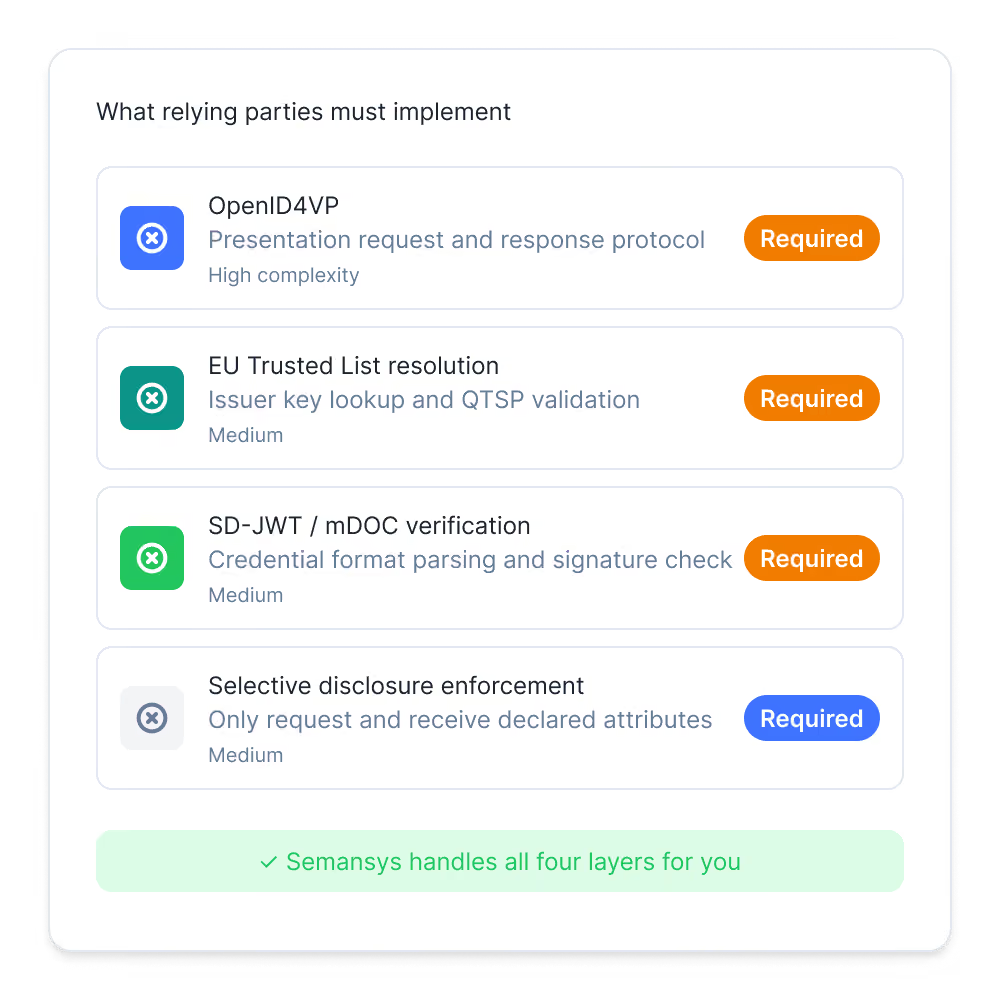

What this means for organisations as relying parties
Most organisations will encounter eIDAS 2.0 first as relying parties, not as issuers. They will be expected to accept wallet-based credential presentations from counterparties, suppliers, and public authorities. That requires integrating the relying-party protocol stack into existing platforms that were not designed with it in mind.
The compliance deadline is concrete. Organisations that have not begun that integration will face a compressed transition when counterparties begin presenting EBW credentials as standard practice in onboarding, procurement, and invoicing flows.
Organisations in regulated sectors, including financial services, healthcare, and public procurement, will face the earliest obligations. For invoicing and reporting specifically, several member states are evaluating identity-layered transaction flows in which counterparty credentials are verified as part of the invoice exchange process. Organisations already connected to Peppol are better positioned to adopt these flows than those starting from scratch.
How Semansys supports readiness
Semansys is an active participant in European Digital Identity standards development, including involvement in the EBW Technical Work Sub-Group of the European Digital Identity Cooperation Group. This participation gives clients direct insight into how specifications are evolving and where implementation choices today may need to be revisited as the framework matures.
Readiness assessment
We map your current identity verification processes against eIDAS 2.0 relying-party obligations, identify the transactions where wallet-based credential acceptance will become mandatory or commercially expected, and quantify the integration gap.
Pilot connectivity
Semansys can connect your platform to live EBW pilot environments for credential verification testing, without requiring you to build your own relying-party infrastructure first.
Integration roadmap
For platforms that will need to consume verified identity signals, including ERP, procurement, and AP automation systems, Semansys provides a structured integration path aligned with the current ARF specification, with sandbox environments available throughout development.
Ongoing compliance monitoring
Request only the attributes you need. Semansys constructs presentation requests scoped to the specific claims required for your transaction, so counterparties disclose only what is necessary and you receive only what you asked for.
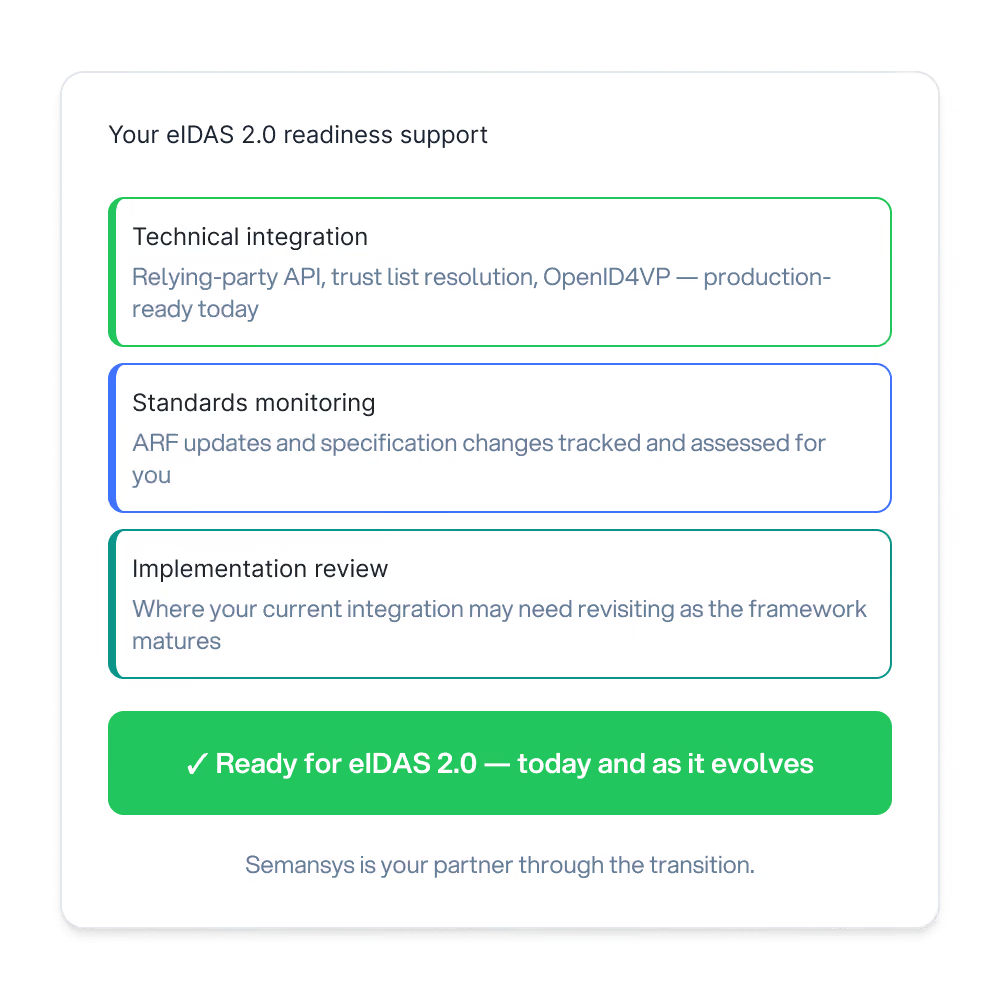
What readiness looks like in practice
A platform that is ready for European Digital Identity can, without manual intervention:
Semansys provides the infrastructure for each of these steps. The organisational decisions, which transactions to identity-gate, which credential types to require from counterparties, and how verified identity interacts with existing onboarding processes, belong to your organisation. Our role is to ensure the technical integration layer is ready when you are.
Our certifications
Certified
TYPE II
9001:2015
27001:2022
20000-1:2018
22301:2019
42001:2026
27701:2025