One Peppol connection, handled for you.
Connecting to the Peppol network
Peppol is the network most tax authorities, public buyers, and a growing share of B2B trading partners have aligned on for structured invoicing. Connecting to it well is harder than it looks: receiver discovery, certified transport, certificate rotation, and continuous accreditation are a standing operational commitment, not a one-time setup.
The platform carries that commitment for you. Your team integrates once, against a stable API, and every Peppol receiver you need to reach becomes reachable.
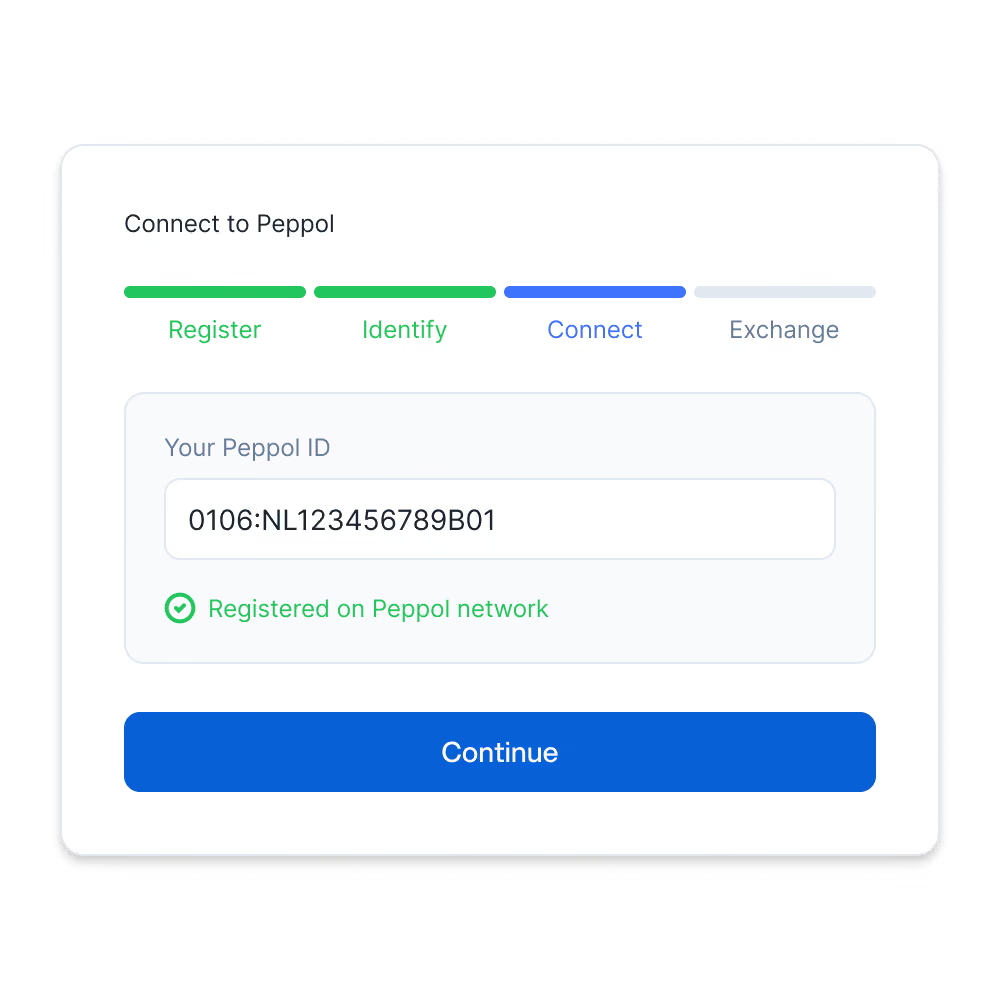

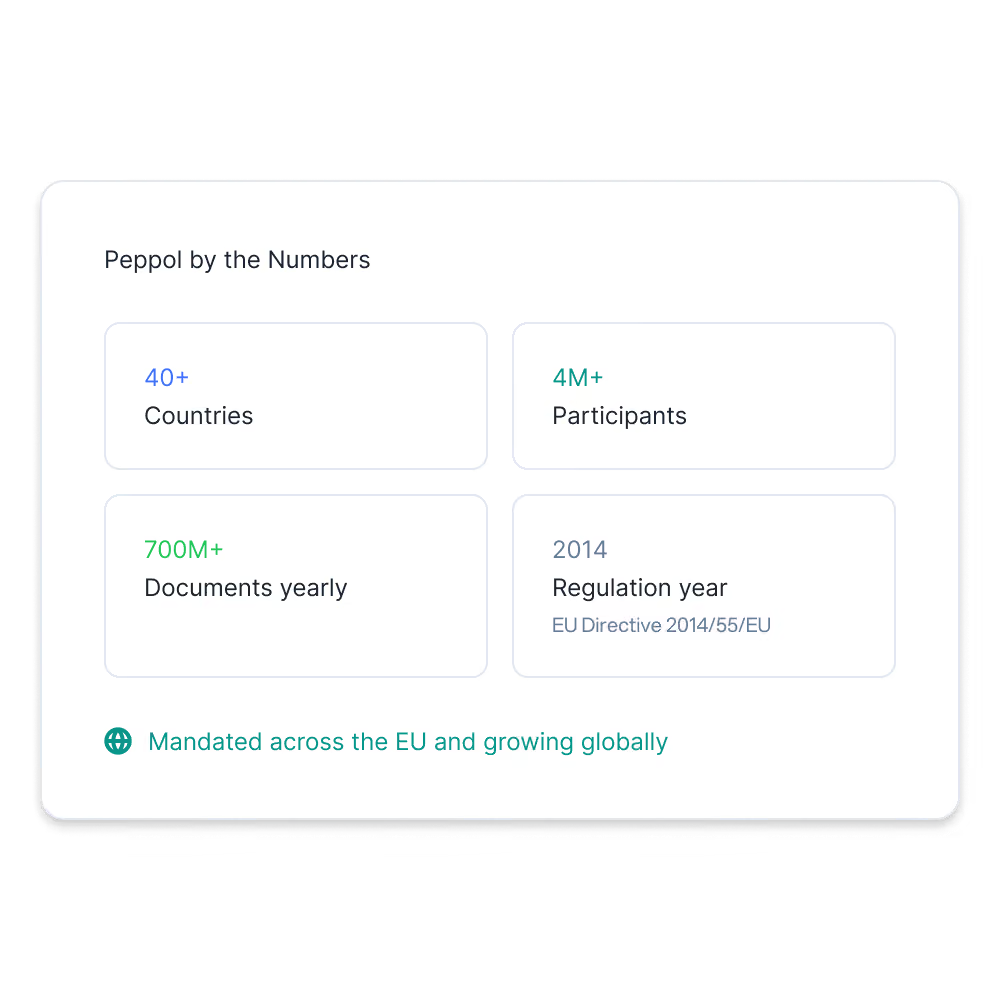
What is Peppol?
Peppol is a four-corner network for exchanging structured business documents — invoices, credit notes, orders, and despatch advices — between trading partners who never need a direct, bilateral integration with one another. A sender connects to one corner of the network; a receiver connects to one corner; the network resolves the route between them and delivers the document in a validated, machine-readable format.
Two pieces make this work. The first is a shared document specification — Peppol BIS Billing 3.0, built on the EN 16931 semantic model — so every participant agrees on what a compliant invoice contains. The second is a directory of participants and the transport rules that move a document from one corner to the next. Because every participant follows the same specification, a supplier reaches any buyer on the network through the same single connection, whether that buyer is a public authority, a multinational, or a small business in another country.
For a finance team, the practical effect is reach without integration sprawl: one connection, instead of a separate file-transfer arrangement negotiated with every counterparty.
The cost of running Peppol yourself
Connecting to Peppol directly means becoming, and staying, an accredited participant. That is a continuing obligation, not a project that finishes.
None of this is your core business, and all of it fails closed — a lapsed certificate or a missed specification update stops invoices from flowing. Building it in-house is a multi-month commitment before the first compliant invoice is sent, and it never reaches a finished state.
Accreditation
Certified transport
Acknowledgment and audit
Identity and discovery
Profile maintenance
The cost of running Peppol yourself
Connecting to Peppol directly means becoming, and staying, an accredited participant. That is a continuing obligation, not a project that finishes.
None of this is your core business, and all of it fails closed — a lapsed certificate or a missed specification update stops invoices from flowing. Building it in-house is a multi-month commitment before the first compliant invoice is sent, and it never reaches a finished state.
Accreditation
Certified transport
Acknowledgment and audit
Identity and discovery
Profile maintenance
We connect you to Peppol
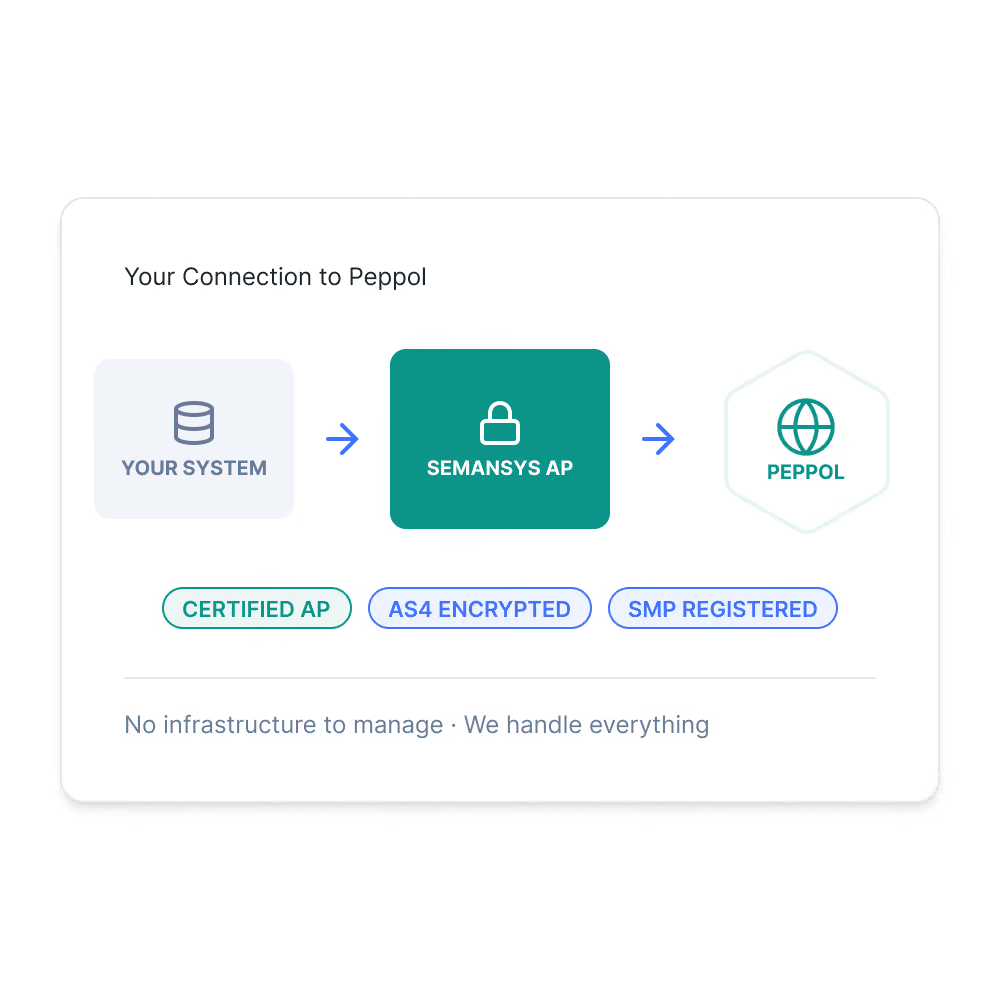
You ship documents from your ERP or finance system. The platform does everything between your system and the receiver's corner of the network.
There is no Peppol Access Point to operate in-house, no service-metadata entries to maintain, no transport certificates to rotate, and no Peppol Authority registration to keep current. You connect once, against the same API used for every other channel on the platform, and your Peppol-reachable trading partners are reachable.
Peppol's global reach
Peppol is how a growing number of countries operate their B2B e-invoicing mandates. The platform's coverage uses three precise status labels, so you always know exactly where a jurisdiction stands.










Semansys holds Peppol Authority accreditation in the Netherlands and Belgium, with France in progress; every other Peppol jurisdiction is reachable via Peppol BIS. No jurisdiction is described as "live" without one of the three qualifiers above — the language is deliberately precise, so finance and procurement teams can rely on the status they read.
Peppol is not a single-region network. The European base profile (Peppol BIS Billing 3.0) is extended by country-specific PINT profiles that carry the network well beyond Europe. One connection reaches counterparties on three continents. And when a flow needs to meet a network that Peppol does not cover — North-American B2B over DBNAlliance, or a national tax-authority clearance system — the same platform routes there too, on the same audit trail.
What we handle, and what stays yours
Everything between your finance system and the counterparty's inbox is the platform's job, not yours.
The platform handles
Receiver discovery and identifier resolution
Validation against EN 16931 and country rules
Certified transport, retry, and idempotent delivery
Certificate issuance and rotation
Peppol Authority registration and accreditation
Signed-acknowledgment capture and retention
You decide
Which trading partners to onboard
Which validation profiles to enforce
Which documents to send, and when
Which entities to register
Standards and formats on Peppol
The platform supports the document profiles and semantic standards Peppol traffic depends on.
The same source data reaches each receiver in the syntax and profile that receiver accepts, without manual rework on your side.
Peppol BIS Billing 3.0
EN 16931
UBL 2.1 and CII
PINT profiles
Country CIUS profiles
Why route your Peppol traffic through Semansys
Some counterparty is always the one that does not fit the happy path, a receiver on an older profile, a rejected acknowledgment, a certificate due for rotation. The value of routing Peppol through the platform is that those cases are handled for you, on infrastructure built and audited for the job.
Audit-grade controls.
Certified to ISO 9001, ISO 20000-1, ISO 22301, and ISO 27001, with SOC 2 Type II and SOC 3 attestations available
An accredited connection, not a resold one.
Semansys operates its own accredited connection to the Peppol network in the Netherlands and Belgium, with France in progress — so delivery quality, the audit trail, and the accreditation lifecycle are controlled directly, not subcontracted.
One audit trail across every channel.
Peppol, DBNAlliance, tax-authority clearance, and email all record to the same chain of custody, so a document's full history reconciles in one place.
Twenty-five years of compliance heritage.
Built by a team that has been delivering compliance software since 1997.
Frequently asked questions
It is the accredited connection through which a participant sends and receives documents on the Peppol network. With the platform you do not run one — the platform provides and maintains that connection on your behalf, including registration, certificates, and ongoing accreditation.
No. You integrate once with the platform's API. The platform handles your participant identity, your service-metadata entries, and transport, so your business is reachable on Peppol without operating network infrastructure.
No. Semansys operates its own accredited connection to Peppol rather than reselling another provider's, which is why delivery quality, the audit trail, and the accreditation lifecycle are managed directly.
Every country on the Peppol network — across Europe on Peppol BIS Billing 3.0, and the United Arab Emirates, Australia / New Zealand, Japan, Malaysia, and Singapore on PINT profiles. See the full coverage for the current jurisdiction table.
The platform routes to whichever channel the document requires — DBNAlliance for North-American B2B, a national tax-authority system where clearance is mandated, or email where a counterparty accepts no structured network at all.
Sandbox access follows a call with our team, with credentials provisioned within one business day. See the sandbox page for the access steps, or the developers page for the API reference.