From obligation to archive, every step handled.
Semansys is designed around this reality. The platform supports every phase of the e-invoicing compliance lifecycle, not just the moment of transmission, giving you control, visibility, and confidence at every step.
Monitor and Interpret
Stay ahead of what is coming.
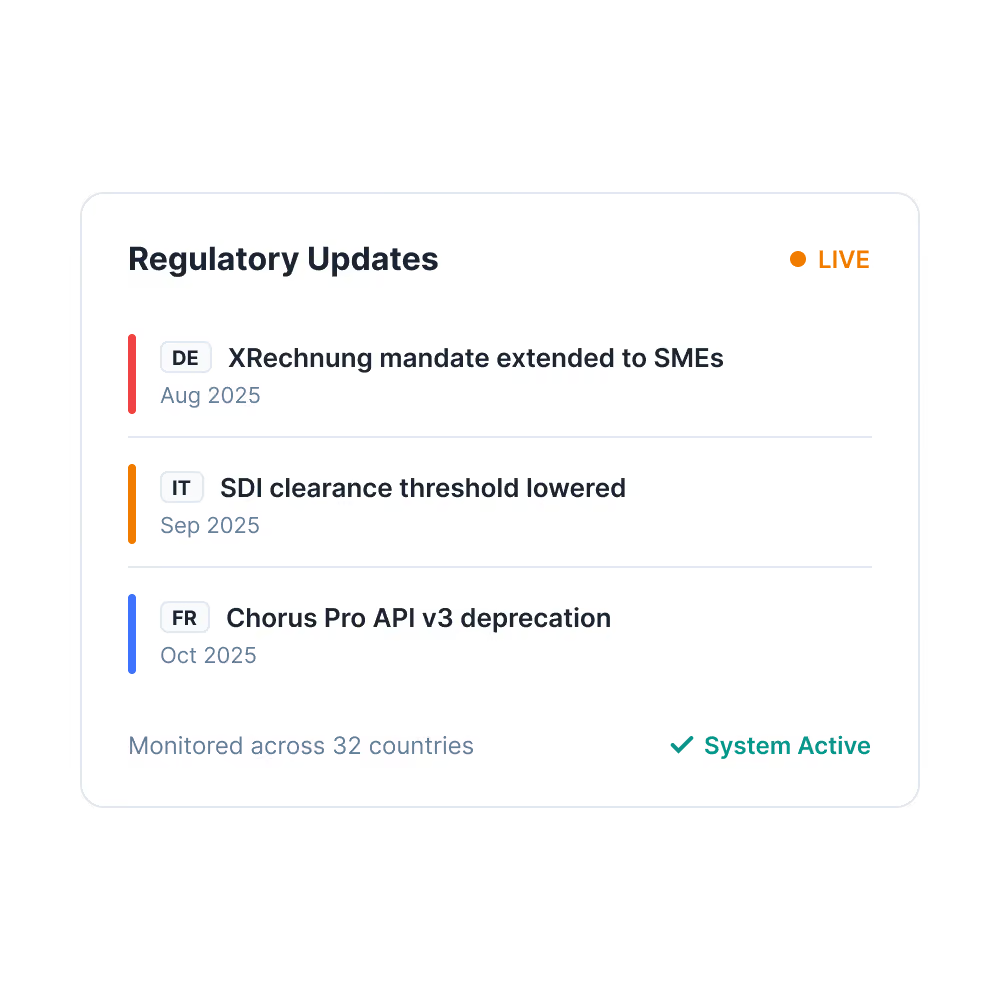
Regulatory change in e-invoicing accelerates every year. New mandates, updated CIUS specifications, revised Peppol BIS profiles, amended schematron rules, and shifting deadlines arrive constantly. Organisations that react late face implementation risk, operational disruption, and potential non-compliance exposure.
The Semansys platform is maintained by a team of regulatory and standards specialists who actively participate in Peppol governance, the ViDA working groups, and national standards committees across Europe. Updated rule sets, revised validation profiles, and new jurisdiction profiles are reflected in the platform ahead of effective dates, not after them.
What this means for you:
You do not need to track every regulatory publication, interpret every updated specification, or rebuild validation logic from scratch. Semansys absorbs that complexity and surfaces it as updated, production-ready platform capability.

Configure and Onboard
Set up once. Scale without friction.
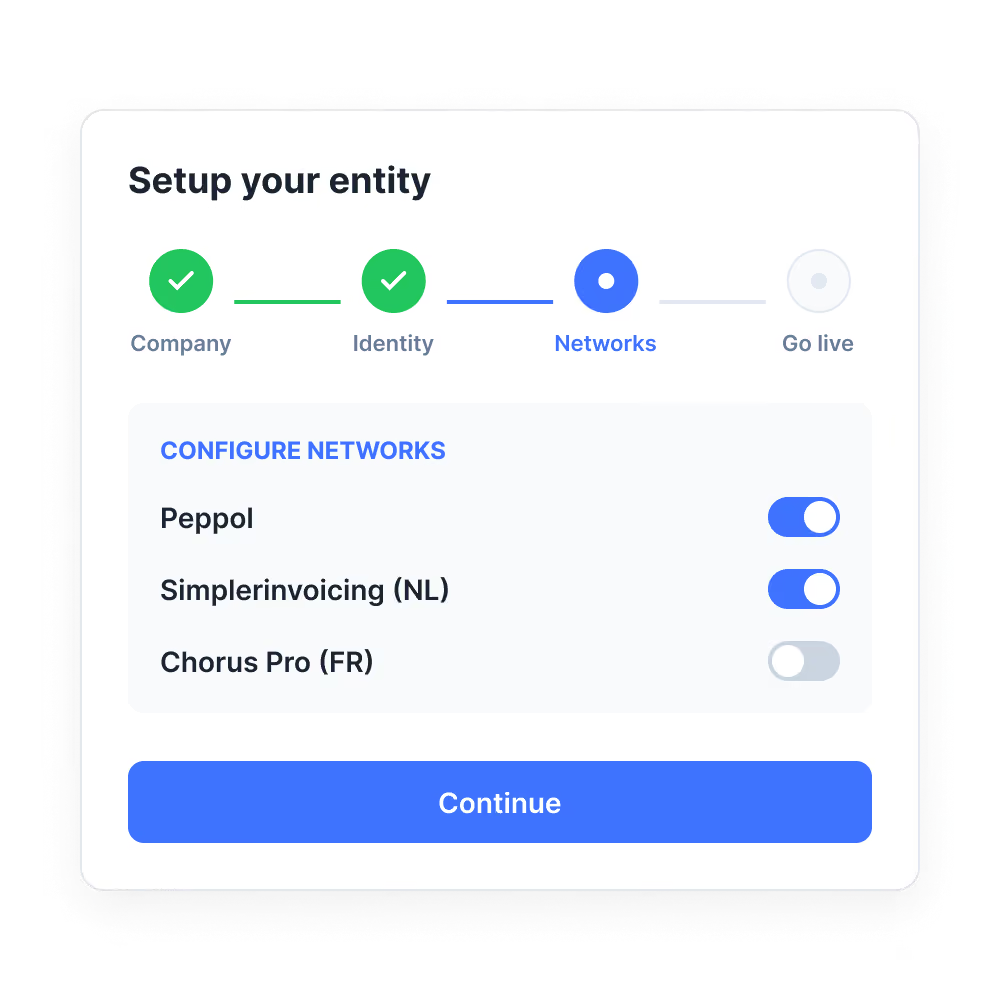
Connecting your system to the Semansys platform is a straightforward, fully documented process. A sandbox environment is available from day one, allowing your development team to integrate against real API endpoints, simulate complete invoice flows, and validate outputs against live rule sets, all without risk and without commitment.
Multi-tenant architecture means enterprise customers and platform operators can onboard subsidiaries, customers, or business units independently, each with their own identity, permissions, and configuration, all under a single platform contract.
Key onboarding capabilities:
Sandbox environment with full API parity to production
OpenAPI specification importable directly into development tooling
OAuth 2.0 authentication setup with clear credential management guidance
Tenant provisioning and user role management via API
Certificate issuance for Peppol participant identity
Configurable validation profiles per tenant or per document flow
Prepare and Validate
Enforce the rules before the invoice leaves your system.
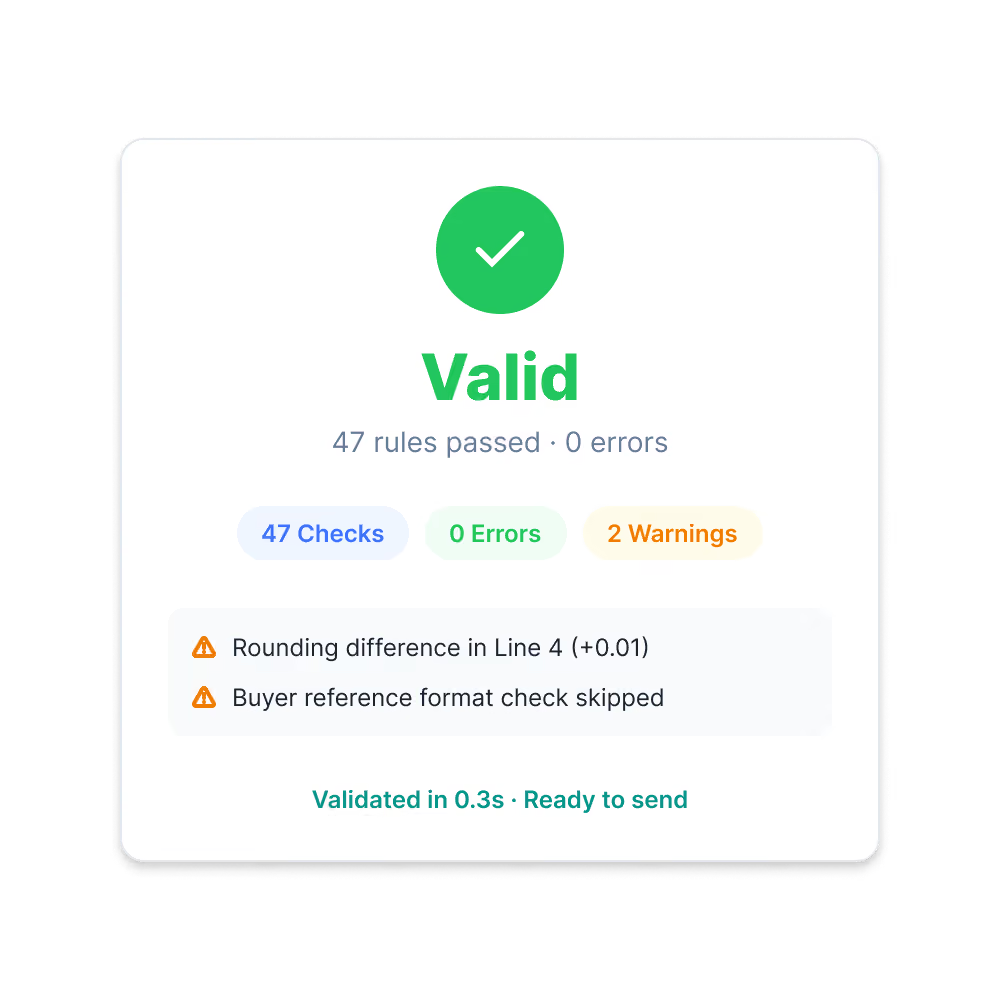
The Semansys validation engine runs the complete rule stack against every invoice before it enters any delivery pipeline. Validation is deterministic, rule-based, and jurisdiction-aware.
In clearance model countries, an invoice that fails validation is not merely delayed. It is legally unrecognised. In Peppol-mandated B2G procurement, a non-conformant invoice means rejected payment. Getting this phase right is not optional.
Results are returned as structured output with error codes, severity classifications, and remediation guidance, machine-readable for automated triage and human-readable for operations teams.
Validation layers applied:
XML Schema conformance
Schematron business rule assertions (PEPPOL-EN16931, PEPPOL-COMMON, and jurisdiction-specific CIUS rules)
Cross-field and cross-document consistency checks
Hash-code generation for integrity verification
Convert and Format
Your data. Every required format. Automatically.
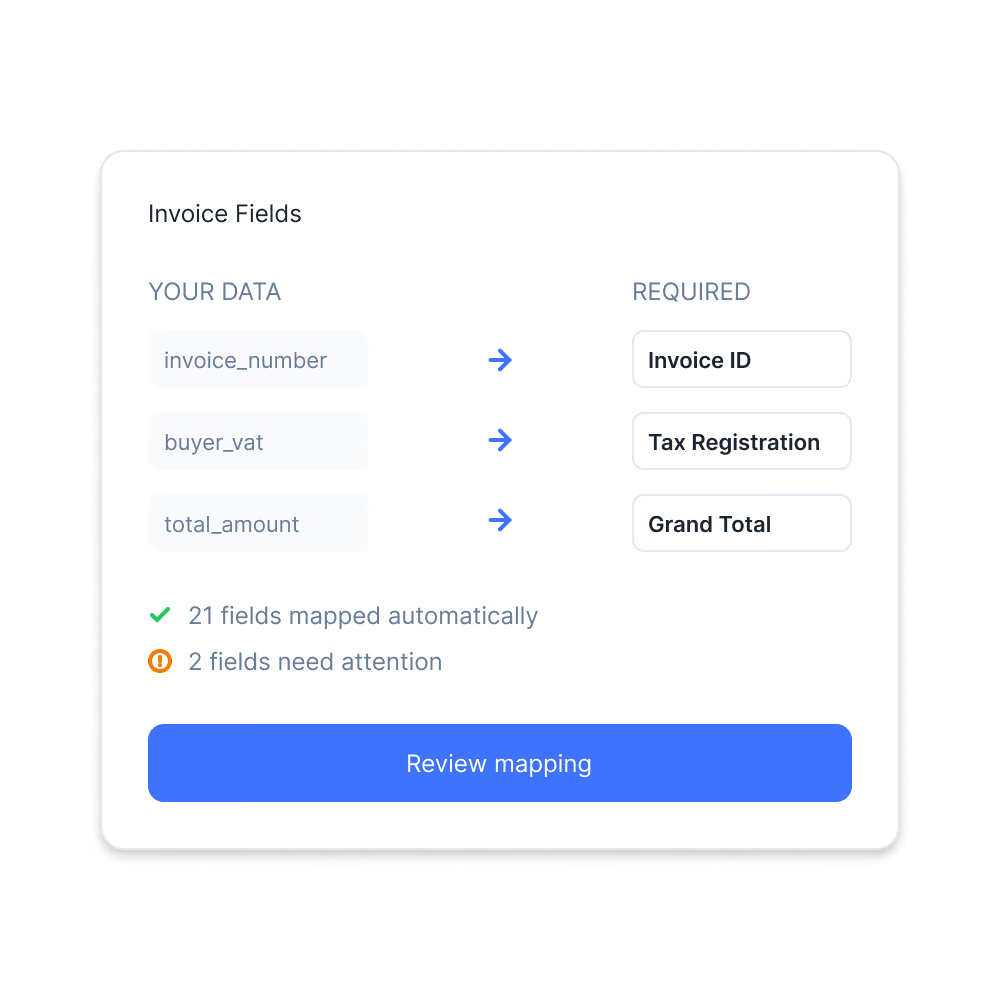
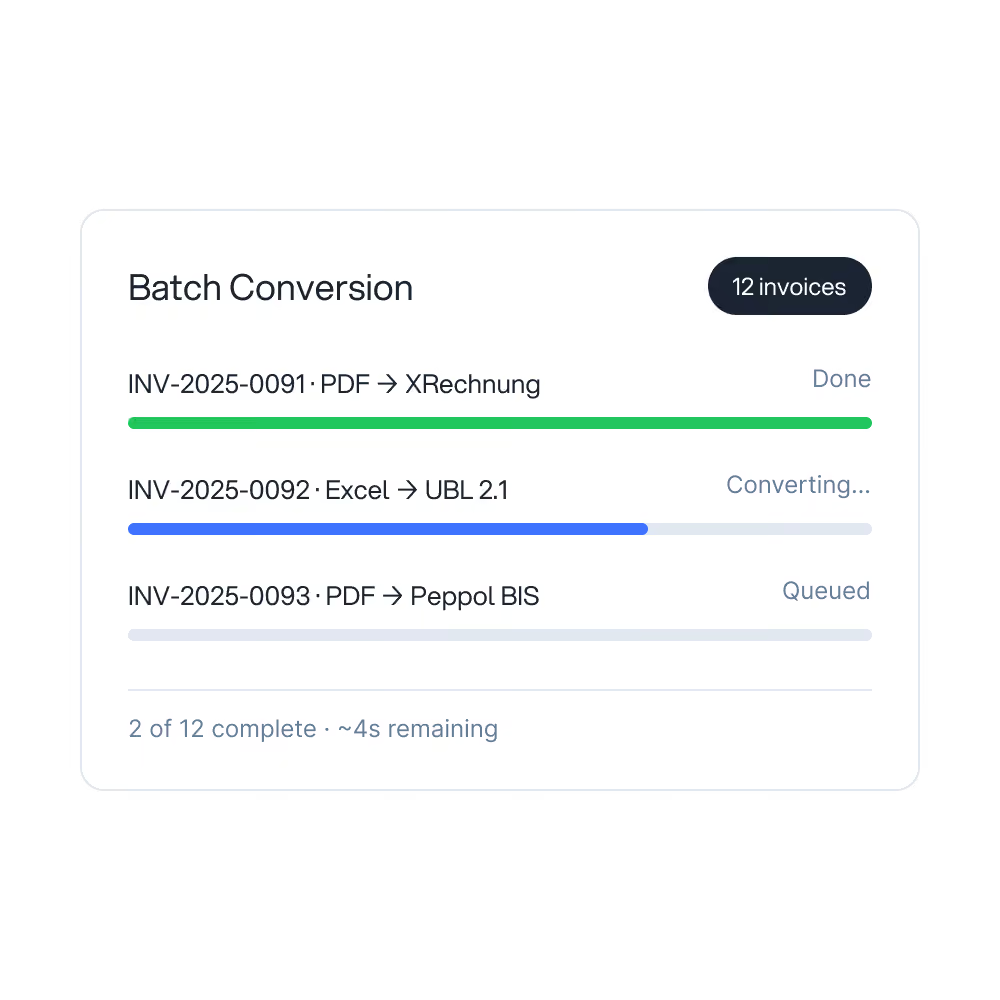
Your internal systems have a native format. Your counterparties and the regulators they report to may require something entirely different. The Semansys conversion layer handles the translation (from UBL 2.1 to UN/CEFACT CII, from structured data to Factur-X, from a national CIUS variant to the Peppol BIS envelope) without any format logic living in your codebase.
Format selection is automatic where receiver registration data is available. For markets requiring simultaneous structured and human-readable output, hybrid formats are generated in a single operation.
Deliver
Guaranteed delivery to every required destination.
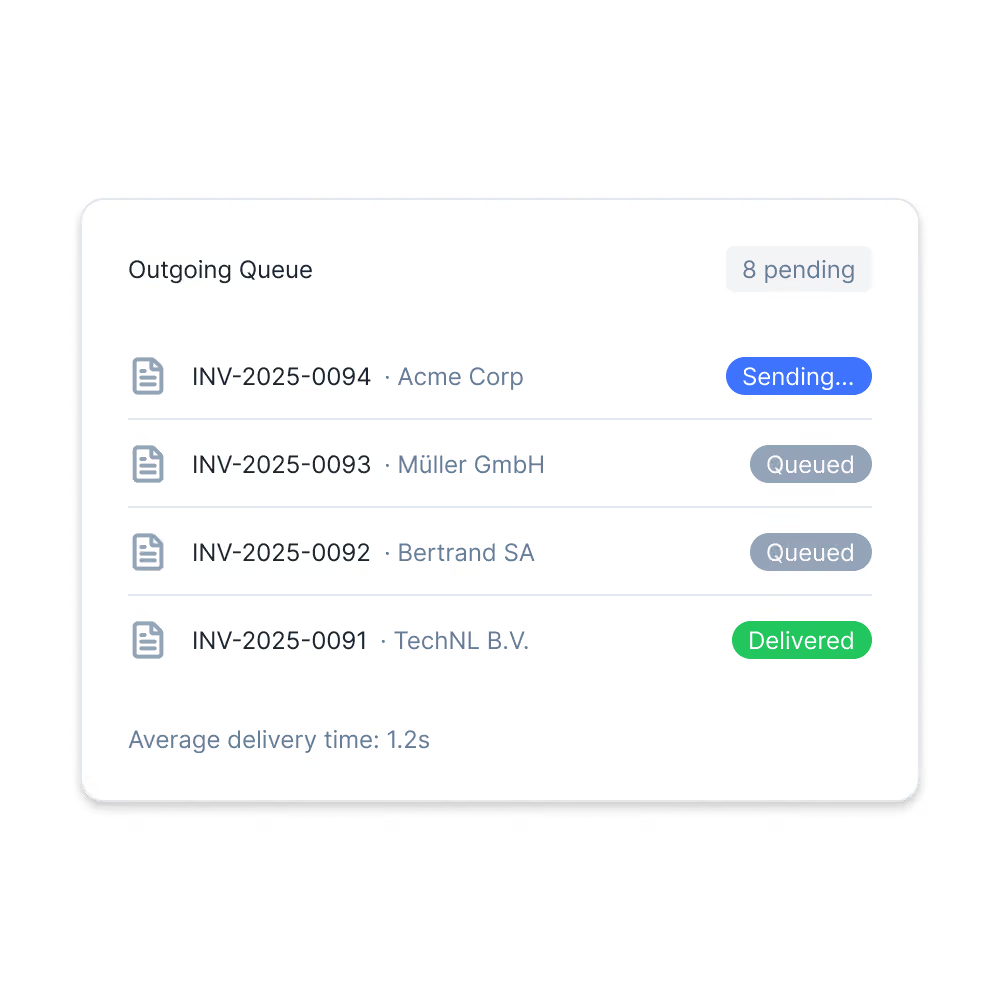
Once an invoice is validated and correctly formatted, it must reach its destination: a Peppol-registered counterparty, a national clearance authority, or a tax portal. Each destination has its own protocol requirements, endpoint discovery mechanism, and acknowledgement model.
Semansys handles the full delivery layer across all supported networks and regulators:
Peppol network: four-corner delivery with SMP lookup, SML resolution, and dynamic endpoint discovery
Italian SDI: clearance model submission and response handling
Polish KSeF: structured submission to the national e-invoice system
French PDP model: submission aligned to the Plateforme de Dématérialisation Partenaire framework
ViDA pilot programmes: real-time reporting flows aligned to the VAT in the Digital Age framework
Additional jurisdictions: Germany, Belgium, Netherlands, Latvia, Hungary, Croatia, Serbia, Denmark, Slovakia, and further markets in active development
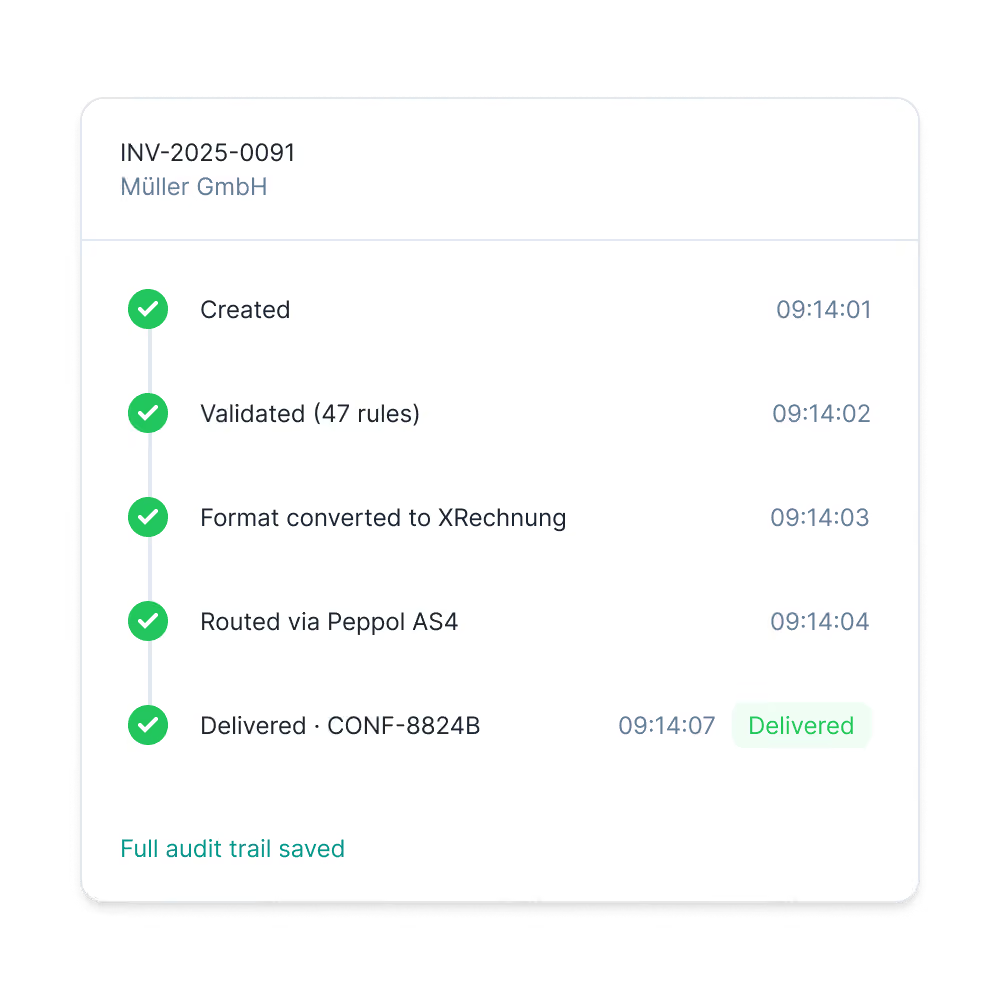
Every delivery generates an auditable event log covering sent timestamp, delivery acknowledgement, network response codes, and final status. Nothing leaves the platform untracked.
Monitor and Respond
Know the status of every invoice, in real time.
After submission, the compliance obligation does not end. Networks return acknowledgements. Clearance authorities issue acceptance or rejection responses. Counterparties raise disputes. Each of these events requires a response and a record.
The Semansys platform surfaces delivery and processing status via API and webhook, giving your application or operations team immediate visibility into the state of every invoice in flight. Structured status codes enable automated downstream processing: triggering payment releases on confirmed delivery, escalating rejections to a remediation queue, or updating ERP records on clearance authority acceptance.
Archive and Audit
Retain everything. Retrieve anything.
Regulatory record-keeping requirements across EU member states typically range from five to ten years. Semansys maintains a versioned, tamper-evident archive of every document processed through the platform, covering input data, generated output, validation results, delivery events, and status responses.
Hash-based file integrity verification means that archived records are demonstrably unaltered. Audit trails are structured, filterable, and exportable, ready for regulatory inspection, internal audit, or legal discovery without manual reconstruction.
Our certifications
Certified
TYPE II
9001:2015
27001:2022
20000-1:2018
22301:2019
42001:2026
27701:2025