Transform financial data into the format regulators require. Accurately, automatically, every time.
The conversion challenge
XBRL exists in multiple serialisations. An XBRL instance document, an Inline XBRL document embedded within an XHTML annual report, and an XBRL Report Package are not interchangeable artefacts. They serve different purposes, satisfy different regulatory requirements, and are consumed differently by downstream systems. Converting between them whilst preserving fact precision, context integrity, and taxonomy references demands a deep, specification-level understanding of each format.
Beyond format translation, many organisations need to go further: generating XBRL from structured data sources, rendering machine-readable XBRL into human-readable presentations, or converting existing PDF or HTML annual reports into Inline XBRL packages that meet ESEF requirements. Each of these is a non-trivial transformation.
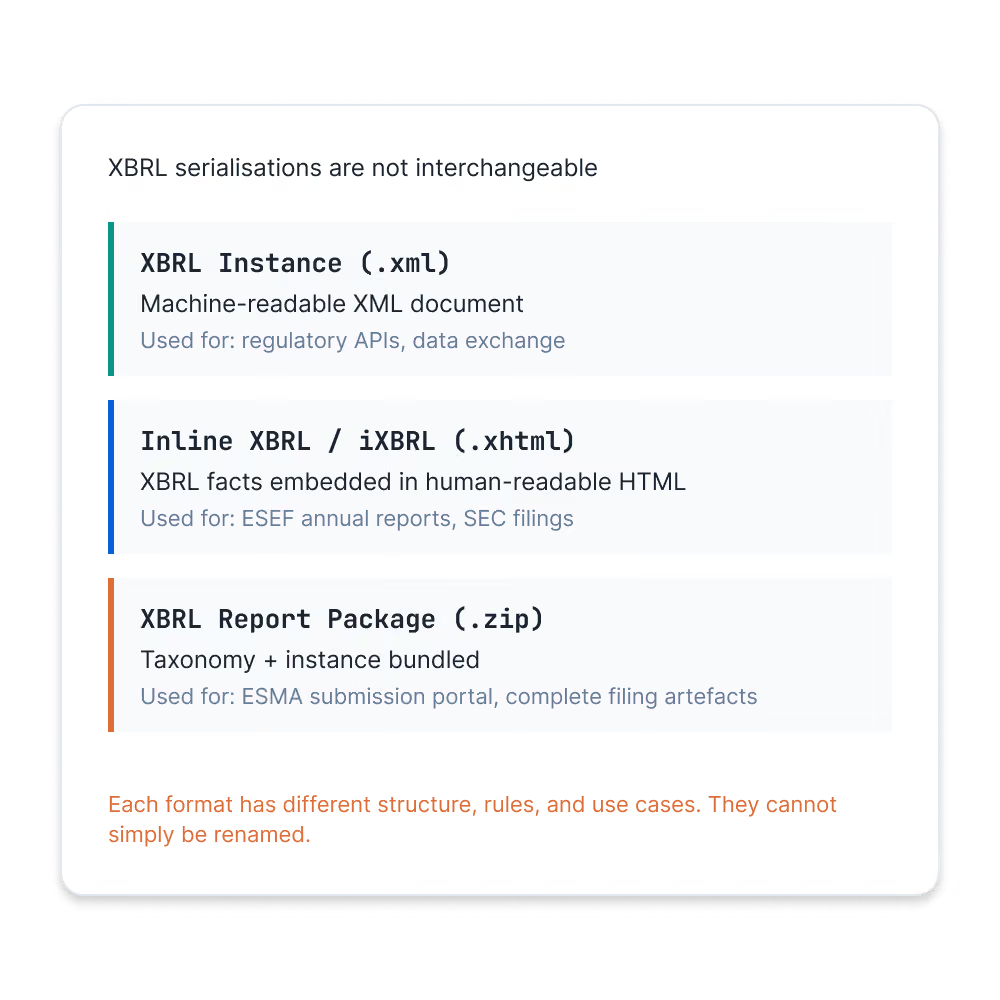

What Semansys converts
XBRL instance generation. Structured data (supplied via the API as JSON or imported from CSV) is converted into valid, taxonomy-conformant XBRL instance documents. Generation is driven directly by the taxonomy, ensuring that every fact is correctly typed, contextualised, and linked.
CSV to XBRL import. Reporting data assembled in spreadsheets or exported from ERP systems can be imported via our CSV import pipeline. The platform maps source columns to taxonomy concepts, applies the correct unit and period contexts, and produces a complete XBRL instance document ready for validation and submission.
Inline XBRL (iXBRL) generation. We generate Inline XBRL from XBRL instance data, embedding machine-readable tagging within human-readable XHTML, to the specification required by ESMA ESEF and other mandates that require the combined format.
HTML to Inline XBRL Report Package. Existing HTML annual reports can be converted into complete Inline XBRL Report Packages. This is the conversion path required for ESEF compliance: take a report that was prepared for human reading, apply the correct XBRL tags to the IFRS financial statement data, package everything to the ESMA specification, and validate the result. We handle the full workflow.
Inline XBRL to XBRL conversion. Inline XBRL documents can be converted back to plain XBRL instance documents for use in analytical pipelines, archival systems, or downstream applications that do not consume iXBRL.
Rendering to human-readable formats. Any XBRL instance document can be rendered into a structured, human-readable presentation, including XHTML views and tax-report-specific layouts for SBR-NL. This bridges the gap between machine-readable data and the review and audit workflows that organisations depend on.
Consistent rendering. For disclosure management and audit workflows, we provide consistent rendering modes (including a “consistent plus” mode that applies the presentation linkbase layout whilst preserving full fact traceability), ensuring that what reviewers see is an accurate, faithful representation of what was filed.
Merge. Multiple XBRL instance documents can be merged into a single, deduplicated instance, useful for consolidation workflows, comparative reporting, and multi-period analysis.
AI-assisted fact extraction. For organisations converting existing documents that were not originally prepared as structured data, our platform provides AI-assisted fact extraction: analysing document content, identifying reported facts, and proposing mappings to taxonomy concepts for review. This dramatically reduces the manual effort involved in the initial tagging of legacy documents.
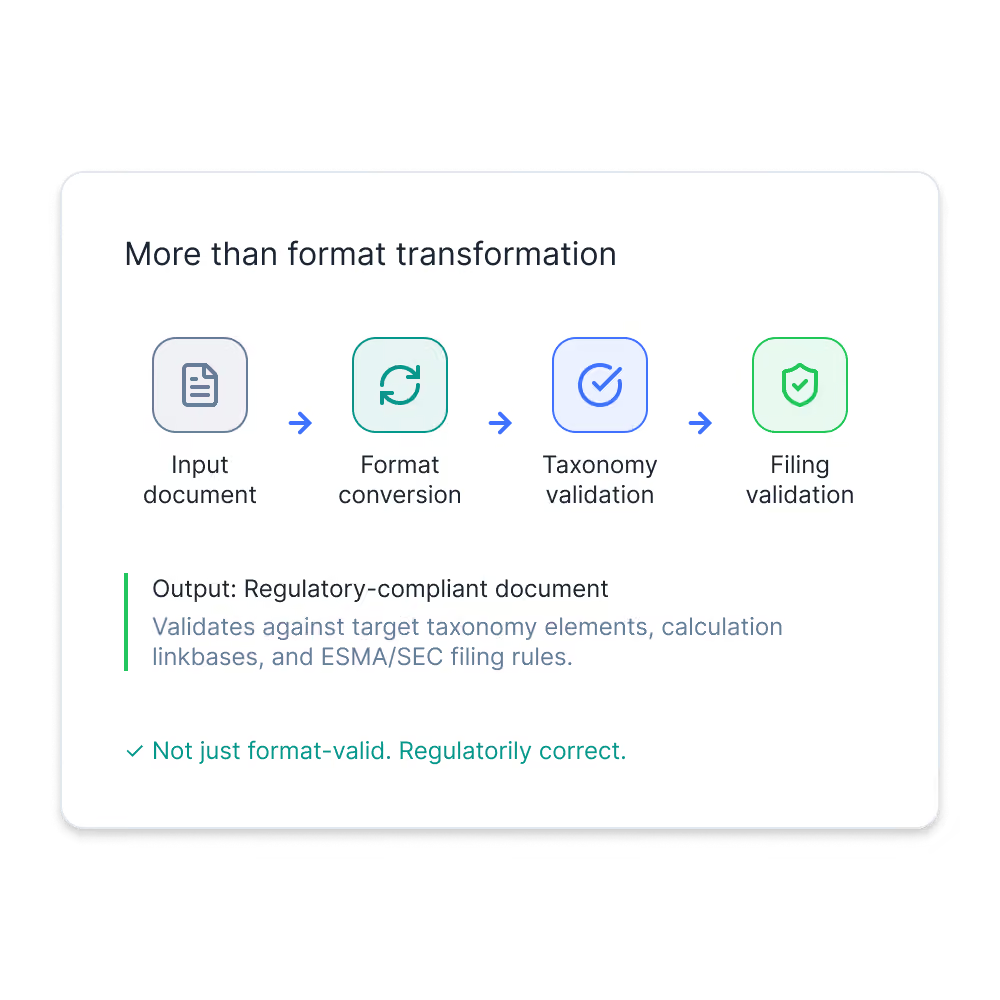
Accuracy is non-negotiable
Every conversion is validated against the target taxonomy and filing rules before the result is returned. You do not receive a converted document that passes format checks but fails regulatory validation. You receive a document that is correct.
Our certifications
Certified
TYPE II
9001:2015
27001:2022
20000-1:2018
22301:2019
42001:2026
27701:2025