One platform. Every e-invoicing obligation. Everywhere.
Semansys brings every e-invoicing obligation together in a single, API-first compliance platform. Not a patchwork of point solutions, but one architecture purpose-built to handle the full breadth of structured invoice exchange across jurisdictions, networks, and regulatory models.
Send and Receive
Structured invoices, delivered compliantly in every direction.
E-invoicing is no longer a choice. Across the EU and beyond, governments are mandating the real-time exchange of structured invoice data. Semansys operates a certified Peppol Access Point and Service Metadata Publisher (SMP), connecting your business to the global Peppol network and to country-specific clearance models alike.
Whether you are a software vendor embedding invoicing into your ERP, a multinational managing cross-border supplier flows, or an access point operator reselling capacity, the Semansys send-and-receive capability is built for your scale and your use case.
What is delivers:
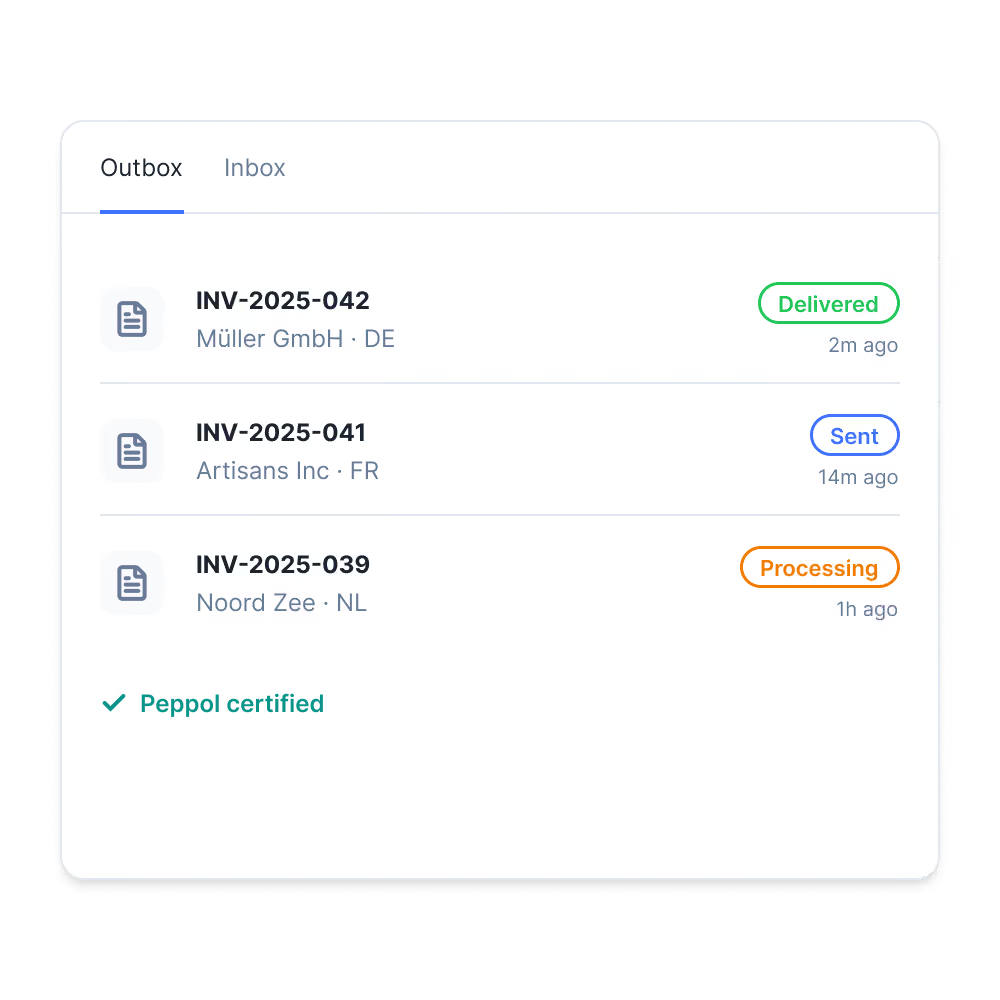

Certified Peppol Access Point and SMP, supporting all Peppol BIS document profiles
Structured invoice sending and receiving across connected networks globally
Full support for BIS Billing 3.0, BIS Self-Billing, BIS Credit Note, and BIS Order transaction flows
Buyer-initiated and self-billing flow support across all supported jurisdictions
Multi-network routing (Peppol and additional exchange networks per jurisdiction)
Hybrid format support (Factur-X and ZUGFeRD) for coexistence of structured data and human-readable PDF
Clearance model integration with SDI (Italy), KSeF (Poland), and ViDA pilot programmes
Real-time delivery status tracking and standards-compliant message handling
Country-specific invoice profiles including NLCIUS (Netherlands), CIUS-RO (Romania), CIUS-AT (Austria), and further national CIUS implementations
Validation
Every rule enforced. Before the invoice leaves your system.
The most costly compliance failures happen not at the regulator but in your own data. An incorrect VAT identifier, a missing mandatory element, a tax amount that does not reconcile, these errors are trivial to fix before submission and expensive to remedy after rejection.
The Semansys validation engine runs the complete rule stack against every invoice before it enters any delivery pipeline. Validation is deterministic, rule-based, and jurisdiction-aware. Results are returned as structured output with error codes, severity classifications, and remediation guidance, machine-readable for automated triage and human-readable for operations teams.
What is delivers:
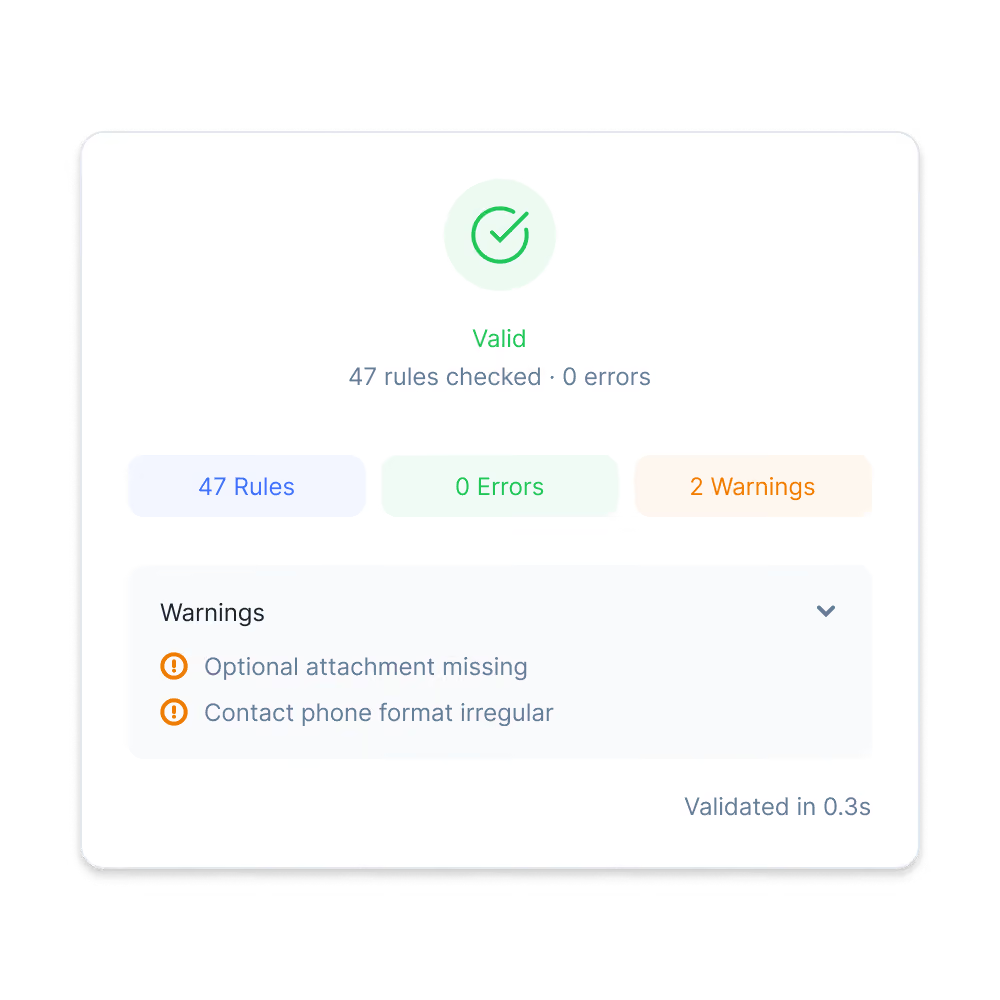
XML Schema conformance validation
Schematron business rule enforcement (PEPPOL-EN16931, PEPPOL-COMMON, and all jurisdiction-specific CIUS rule sets)
Cross-field and cross-document consistency checks
Hash-code generation for file integrity and audit trail purposes
Structured error output with severity levels and remediation context
Configurable validation profiles per jurisdiction or per customer
Format Conversion
Your format in. Every required format out.
Your internal systems speak one language. Your counterparties and regulators speak many. The Semansys conversion layer translates between UBL 2.1, UN/CEFACT CII, Factur-X, ZUGFeRD, and jurisdiction-specific variants without requiring you to maintain any format logic in your own codebase. Provide your invoice data and Semansys ensures it arrives in the exact format the receiver requires.
What is delivers:
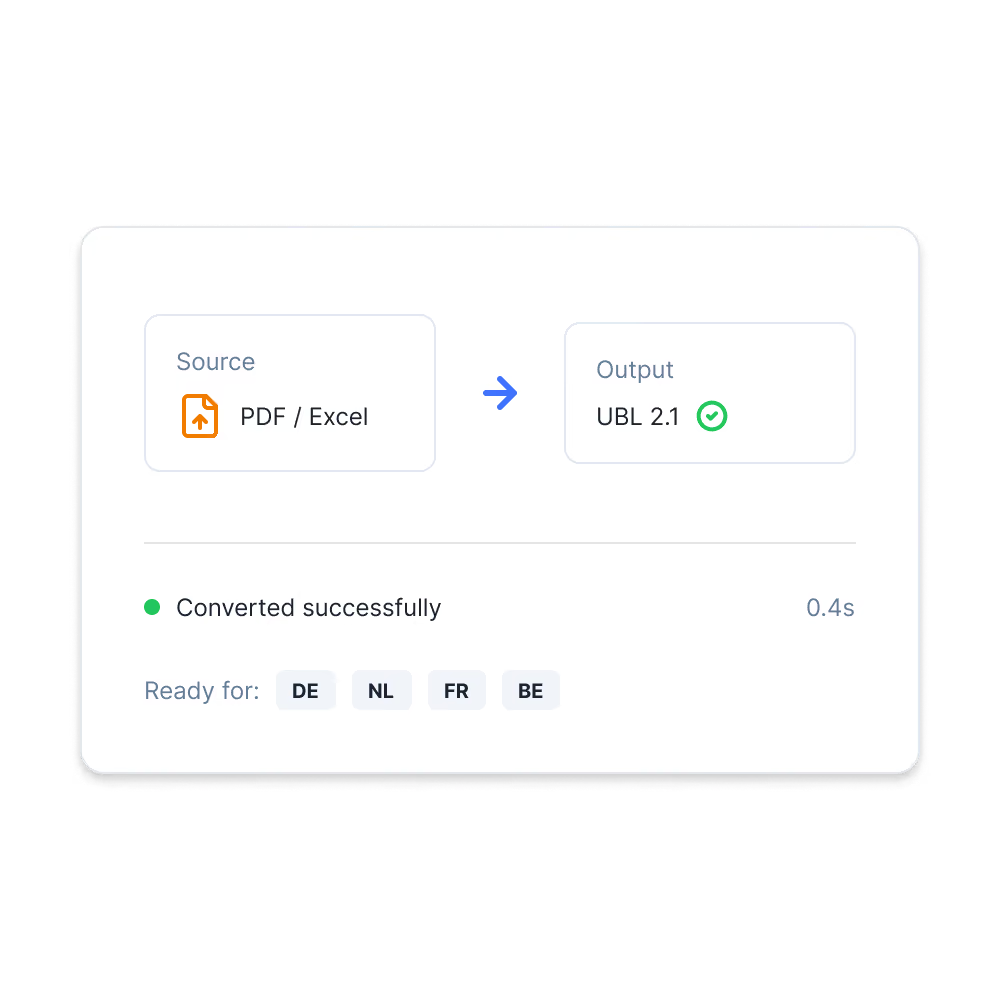
Conversion between UBL 2.1, UN/CEFACT CII, Factur-X, ZUGFeRD, and jurisdiction-specific format variants
Automatic format selection based on receiver registration and jurisdiction requirements
Hybrid format generation for markets requiring simultaneous structured and human-readable output
No format expertise required on your side, and no brittle transformation logic to maintain
e-Delivery
Secure, standards-based document exchange across every network.
Moving a structured invoice from sender to receiver spans certificate management, network routing, message protocol, four-corner delivery topology, and receiver registration in distributed service metadata. One error in any layer breaks the chain.
The Semansys e-Delivery capability handles every layer, providing a managed and certified delivery infrastructure that abstracts network complexity from your application. You call an API and know the invoice arrived.
What is delivers:
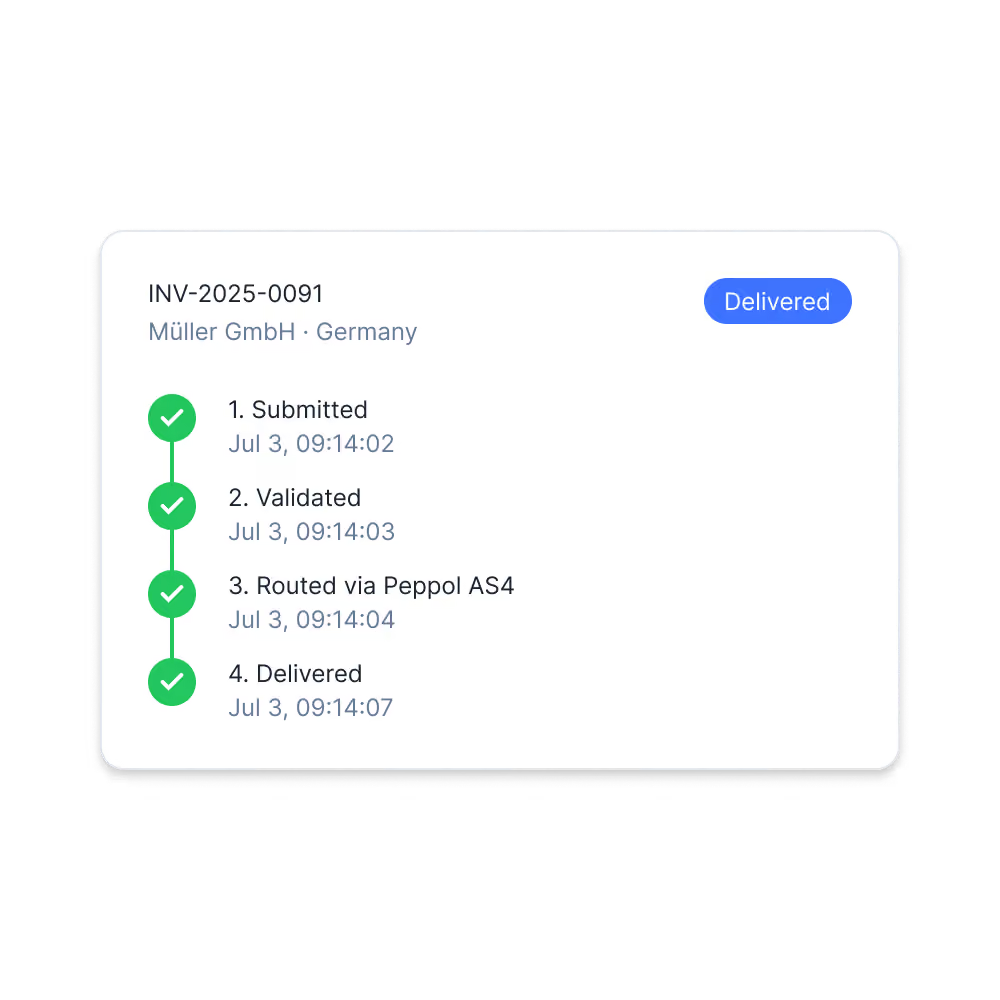
End-to-end encrypted messaging with non-repudiation
Four-corner Peppol routing with SMP lookup, SML resolution, and dynamic endpoint discovery
Certificate lifecycle management for access point operations
Multi-network routing logic for jurisdictions with parallel exchange infrastructure
Delivery status events and acknowledgement tracking surfaced via API and webhook
Outbound and inbound document handling for any registered Peppol participant
Self-hosted and managed access point options for operators building resale capacity
Message archive with tamper-evident storage and retrieval
API and Integration
Integrate once. Comply everywhere.
Every Semansys capability is available via a clean, versioned RESTful API with a full OpenAPI specification in both JSON and YAML. Whether you are building a native integration, embedding compliance into your ERP, or operating Semansys as an OEM layer within your own product, the API surface is designed for developers who need reliability, predictability, and full programmatic control.
What is delivers:
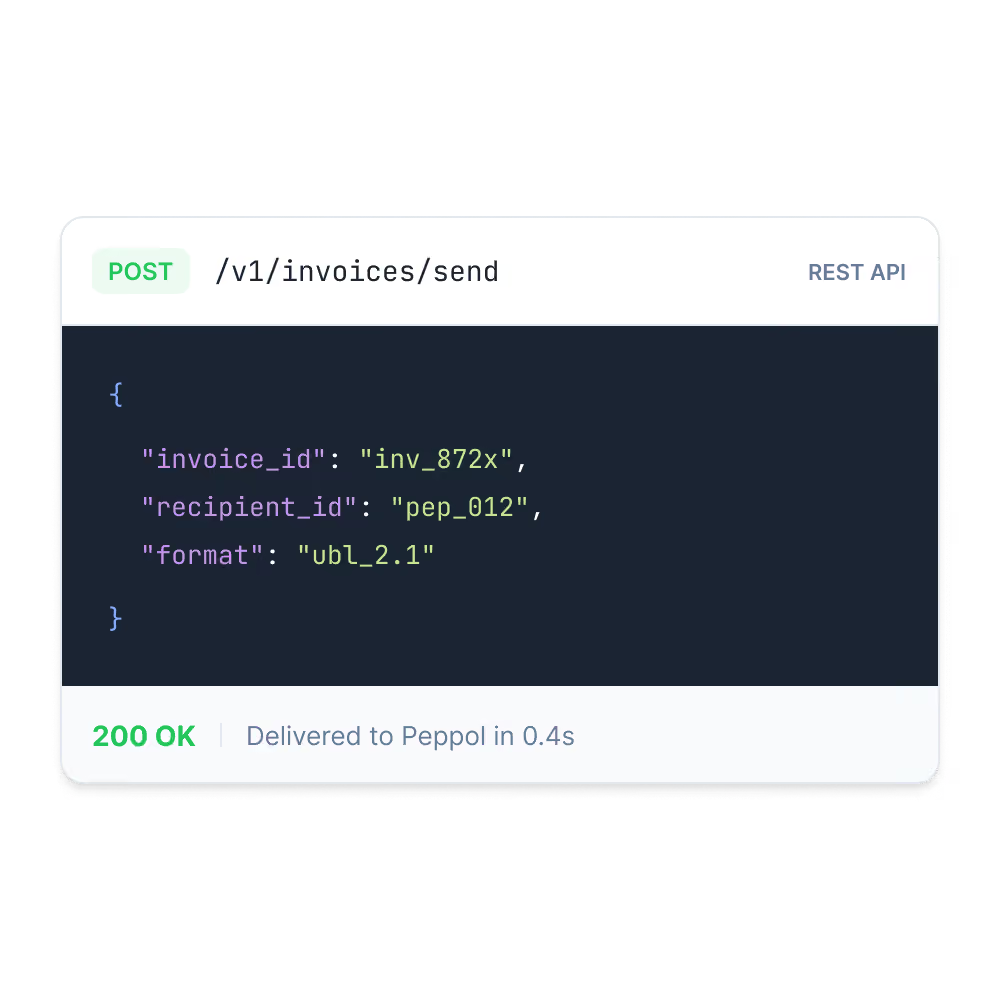
Versioned RESTful API with full OpenAPI specification
OAuth 2.0 authentication with bearer token support
Sandbox environments for integration testing without touching live networks or regulators
Structured error codes, detailed error messages, and machine-readable validation output
Webhook and event-based delivery status notifications
Multi-tenant architecture supporting white-label and OEM deployments
Documented change policy with formal notification periods ahead of breaking changes
Interactive documentation portal for direct endpoint testing

e-Identity
Verified identity for compliant transactions under EU trust frameworks.
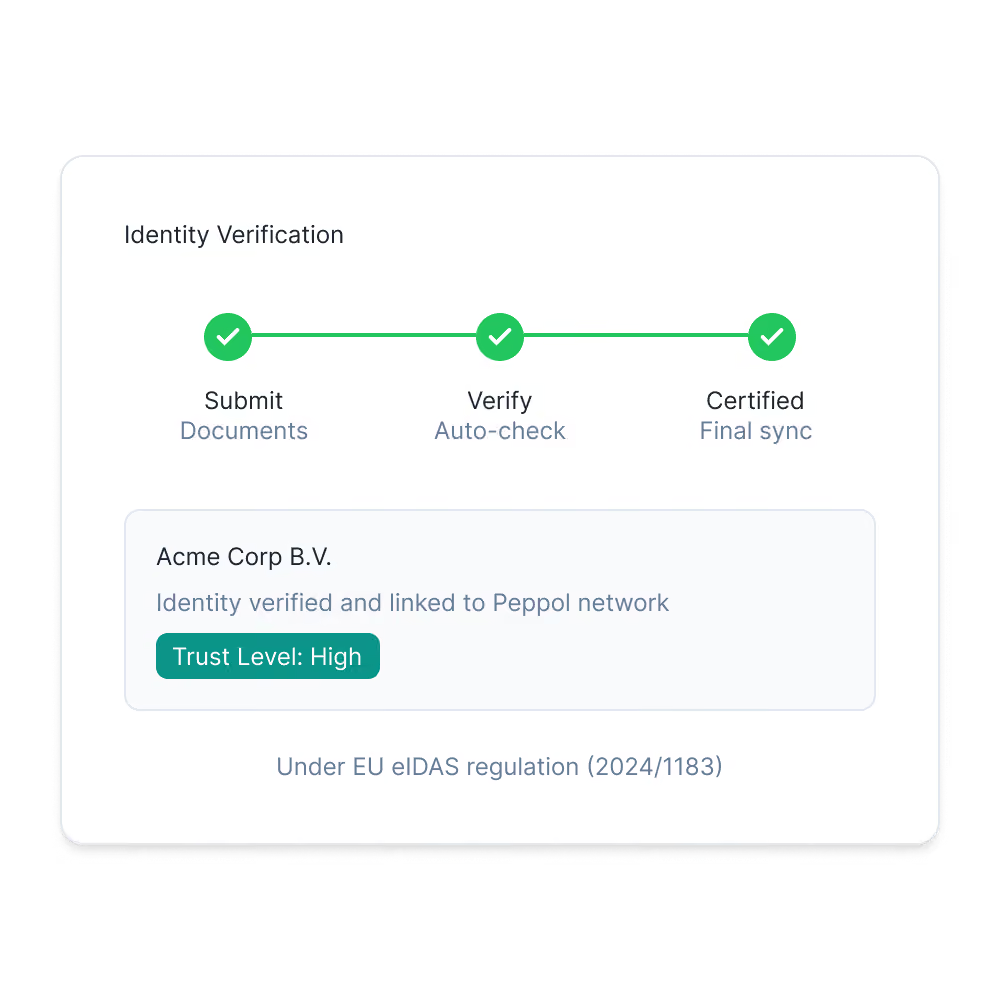
Regulatory compliance increasingly depends on knowing who you are dealing with. Under eIDAS 2.0 and the European Digital Identity (EUDI) Wallet framework, qualified electronic signatures, authentication, and trusted credential exchange are becoming prerequisites for regulated invoice flows.
Semansys e-Identity bridges your invoicing workflows to EU-recognised identity infrastructure, enabling authenticated access, qualified signature workflows, and verifiable credential exchange within the same platform that handles your invoice exchange.
What is delivers:
eIDAS 2.0-aligned digital identity services for business authentication and signing
Qualified electronic signature (QES) and advanced electronic signature (AdES) workflows
EUDI Wallet-compatible credential verification and presentation
Organisational identity management covering role assignment, user provisioning, and certificate issuance
Secure access control for multi-tenant platform deployments
Audit-grade identity logs for regulatory and forensic review
Integration with national trust service providers across EU member states
Our certifications
Certified
TYPE II
9001:2015
27001:2022
20000-1:2018
22301:2019
42001:2026
27701:2025
Frequently asked questions
Electronic invoicing, or e-invoicing, is the creation, exchange, and processing of invoice data in a structured, machine-readable format.
A PDF invoice is digital, but it is not necessarily a structured electronic invoice. A structured e-invoice contains data that receiving systems can validate and process automatically without manual re-entry.
Semansys supports the e-invoicing lifecycle from source data to compliant delivery. Services include:
- Invoice-data validation
- Format conversion
- Business-rule validation
- Participant discovery
- Peppol delivery
- Country-specific network connectivity
- Tax-authority clearance or reporting integration for supported jurisdictions
- Receipt and status processing
- Audit trails
- API integration
- Webhook notifications
- Monitoring and exception handling
Semansys provides one consistent integration while managing differences between countries, networks, formats, and validation rules.
Yes. Semansys supports both outbound and inbound electronic invoicing.
Outbound invoices are validated, converted, and delivered through the required network or government system. Inbound invoices are received, validated, normalised, and delivered to the customer’s ERP, accounting platform, or document workflow.
Peppol is an interoperability framework for the secure exchange of structured electronic business documents. It combines standardised document specifications, network rules, participant discovery, and accredited service providers.
Peppol uses a four-corner model. Senders and receivers connect through their own service providers, enabling organisations to exchange documents without using the same software provider. Read about the OpenPeppol interoperability framework.
Yes. Semansys operates a certified Peppol Access Point and provides connectivity to the Peppol network.
An Access Point is the technical service through which organisations send and receive business documents over Peppol.
An SMP, or Service Metadata Publisher, publishes information about a participant’s capabilities on the Peppol network. This includes the document types and business processes that the participant can receive and the Access Point through which it can be reached.
Semansys provides SMP capabilities alongside its certified Peppol Access Point service.
No. Peppol’s four-corner model allows trading partners to use different accredited Peppol service providers.
A customer using Semansys can exchange supported documents with a trading partner connected through another Peppol provider. Learn more about Peppol for end users.
Yes. Semansys supports Peppol, country-specific tax-authority platforms, clearance systems, filing channels, and other regulated exchange networks.
Based on the configured compliance profile, participant information, document type and jurisdiction, the platform determines or applies the supported delivery route.
Yes. E-invoicing requirements differ considerably between jurisdictions. Countries may prescribe different formats, validation rules, delivery channels, clearance models, reporting obligations, digital signatures, archiving rules, and response messages.
Semansys uses jurisdiction-specific compliance profiles to manage these differences while maintaining a consistent customer interface.
Yes, provided the source data contains the information required by the destination format and applicable business rules.
Conversion cannot compensate for missing or incorrect business data. Semansys therefore combines conversion with validation so incomplete or non-compliant source documents are identified before transmission.
The platform returns validation messages identifying the relevant rule, field, or document element. The invalid invoice is not transmitted as if it were compliant.
Depending on the configured workflow, the document can be rejected, placed in an exception queue, corrected manually, or returned to the source system for automated correction.
Yes. The EU’s VAT in the Digital Age package, commonly known as ViDA, introduces a progressive programme of VAT modernisation involving structured e-invoicing and digital reporting.
The package was adopted on 11 March 2025, entered into force on 14 April 2025, and will be implemented progressively. Cross-border digital reporting and structured e-invoicing are central elements of the programme. Read the European Commission’s ViDA overview.
Semansys helps organisations build an architecture that accommodates current national mandates and future European requirements without creating a separate integration for every regulatory change.